Black History Month Spotlight: #Oscarssoblack? Progress Within the Entertainment Industry
Filed Under: Best Practices, Market Research, Black / African American

Ashleigh Williams
Vice President, Live Qualitative Research
As we close Black History month this year, we reflect on the progress that’s been made when it comes to diversity in the entertainment industry. In the past decade, we have seen a larger push from the Black/African American community for the inclusion of Black perspectives in mainstream media. We are now seeing evidence of Black cultural contributions in music, television, and film more than ever before. While the entertainment industry has certainly come a long way, there is still a need for Black perspectives in other entertainment categories. Black/African American artists continue to forge ahead and break through systematic stereotyping while overcoming barriers in other categories of entertainment that the Black community is actively engaged with.
Music
It comes as no surprise that one of the biggest contributions that Black culture has cultivated is through R&B, Hip Hop and Rap with music artists like Drake, Beyoncé, Ariana Grande, Migos, and Cardi B. In fact, “R&B and Rap/Hip Hop’s share of total album equivalent volume has grown from 29% to 31%, while Rock has fallen 25% to 23%” (Nielsen 2018). Additionally, “R&B/Hip Hop now represents 36% of total on-demand streams, 38% of on-demand audio streams and 34% of on-demand video streams” (Nielsen 2018).
With origins in the disc jockey community on Black radio and nightlife, Hip Hop and Rap music have always reflected the daily life of Blacks in this country, from the struggles to the triumphs. Music is just one of many examples of how Black culture has—and will continue to—build bridges of affinity with other cultures.
For Black culture, music continues to be a pillar, with Nielsen reporting that, “Black consumers spend 38 hours each week listening to music and $173 each year on purchased music. This exceeds the total population which averages 32 hours weekly and $156 annually” (Nielsen 2018).
Black consumers tend to be more tech-savvy than Non-Hispanic White consumers when it comes to how they listen to their favorite tunes. “Nineteen percent of Blacks (slightly higher than 18% of Whites) have a smart speaker in their household. Fifty-two percent of Black listeners use audio streaming services such as Spotify, iHeartRadio, TuneIn, Pandora, Apple Music, and Soundcloud, versus only 40% of Non-Hispanic Whites” (Nielsen 2018). In addition, Black youth spend significantly more time listening to music per session than Non-Hispanic White youth (YouthBeat® 2018). “They also spend more time listening to the radio, with the average Black listener spending over 13 hours weekly listening to the radio” (Nielsen 2018).
Digital Use + Black Twitter

But this behavior isn’t just evident in musical entertainment. “Black consumers over-index for all things done on a smartphone, including social networking usage (75%), video (66%), and audio streaming (45%) on their smartphones” (Nielsen 2018). In addition, Nielsen reports, “Black consumers spend over 19 hours weekly on smartphone apps and the internet” (Nielsen 2018).
But what drives this behavior? Well, one reason could be Blacks’ average age. “54% of blacks are age 34 and younger have lived an entire life in the digital age (Nielsen 2018).” And, Black youth are more likely than their Non-Hispanic White (NHW) peers to watch streaming programs, download music, and read a book on their phone in the past week (YouthBeat® 2018).
With so much time spent on their devices, it’s no wonder that Black consumers help shape media content online and have a strong social presence via commentary on social media platforms. This dialogue has developed its own identity on Twitter. “Black Twitter” today, as we know it, takes the form of the “Black voice” in response to relevant social topics. However, it does extend past activism. “Black Twitter” is specifically known for its humor and natural ability to throw ‘shade’ whenever warranted.
“Approximately 28% of Twitter’s 67 million American users are Black (double this segment’s 14% share of the total population), and 40% of Black/African Americans are on Twitter,” according to Nielsen. Of the 19 million Black/African Americans on Twitter, 9.3 million (or 20% of all African Americans) are on “Black Twitter” (Nielsen 2018). Hashtags like #growingupblack and #askrachel are examples of ways the “Black Twitter” community can share similar experiences of what it’s like to be Black in America. In addition, this platform can be used to celebrate accomplishments, such as #blackgirlmagic, that may not be seen in mainstream media—a way to lift each other up and motivate future generations.
Black Twitter’s influence has shaped diversity within the entertainment industry and brought a call to action. “#Oscarssowhite” is a great example of how Black Twitter can engender change over time. Since the viral hashtag in 2016, the number of films made with a diverse cast, as well as films nominated starring people of color, have increased exponentially.
Brands are buying in and seeking clout with Black Twitter to help boost their brands. In 2016, Hamburger Helper dropped a five-track mixtape called “Watch the Stove” that went viral (Nielsen 2018).
Television + Movies
Television and movies have seen a large transformation, with more all-Black casts featured than ever before. Shows like How to Get Away With Murder, This is Us, Blackish, Grownish, and Scandal are more recent examples of breaking through barriers of casting Black leads in primetime television. In addition, digital content providers like Netflix have been proactive in their desire to offer diverse content, including Black storytelling. In June 2018, Netflix released a powerful campaign that featured Black creators, directors, and actors to promote their “Strong Black Lead Initiative.” This solidified Netflix’s commitment to sharing great content around Black stories and perspectives. They even established a social media presence under the handle @strongblacklead to establish a digital dialogue.
If movies like A Wrinkle in Time and Marvel’s Black Panther are any indication of trends, they show that entertainment with a predominately multicultural cast can not only survive but thrive. A Wrinkle in Time breaks barriers by casting a biracial protagonist in its lead role, bringing this story from the 1960s, when it was written, into present day. These movies have been inspirational to the younger generation, who look at their characters as role models and reflections of themselves.
With $192 million in sales for its opening weekend, Black Panther helped break the Hollywood stigma that a film with an all-Black cast can’t have national or global success. In addition, the depiction of Black women in this film seeks to shatter stereotypes and show them in a positive and empowering position. Images of Black women with all-natural hairstyles as warriors protecting their people—even saving their tribe from the men themselves—were strategically crafted to empower and inspire young Black girls throughout the world. The movie recently won best ensemble in a motion picture at the SAG Awards, proving that a Black cast not only sells but can also receive top recognition in the film industry. It also won Oscars for Best Production Design, Costume Design, and Best Original Score at the 2019 Academy Awards.
Other Black films also took away awards. Regina King won her first Oscar for Best Supporting Actress for her role in a movie based on a James Baldwin book, If Beale Street Could Talk. Spider-Man: Into the Spider-Verse won Best Animated Feature. Spike Lee won his first Oscar for Best Adapted Screenplay for his movie Blackkklansman, a movie many people saw as a call to action for the racial injustice that still exists in America. What do all these stories have in common? Authentic stories told from the Black perspective by Black people themselves. They stood in their own truth.
It begs the question: are the days of #Oscarssowhite behind us? Some would say no. While Black excellence was certainly at the forefront of the awards season this year, the big Oscar award winners of the night were quite controversial when it came to perceptions expressed by the Black community. This comes as no surprise to most, who have noticed that movies that focus on race from Non-Hispanic White writers’ perspectives tend to get praise over movies where Black artists tell the stories. Greenbook, a movie based on a true story about an Italian bouncer/driver and a black pianist by the name of Don Shirley, won Best Picture this year. The Black community expressed concern for the director’s lack of desire to include the perspective of the Black character’s experiences, following a report that the director didn’t even meet with or know the surviving members of the family. It was eventually condemned by a surviving family member.
At the Oscars, Spike Lee protested the award, calling it a “bad referee call.” Black Twitter quickly took to their tweets, expressing their dismay.
Overall, we know that Black representation in the entertainment industry matters to Black audiences. In a recent YouthBeat® study, Black parents were significantly more likely to appreciate in-culture entertainment (26% said their favorite movie to watch with their child in the past year was Black Panther, vs. 3% for Non-Hispanic White parents and 5% for Hispanic parents).
Gaming
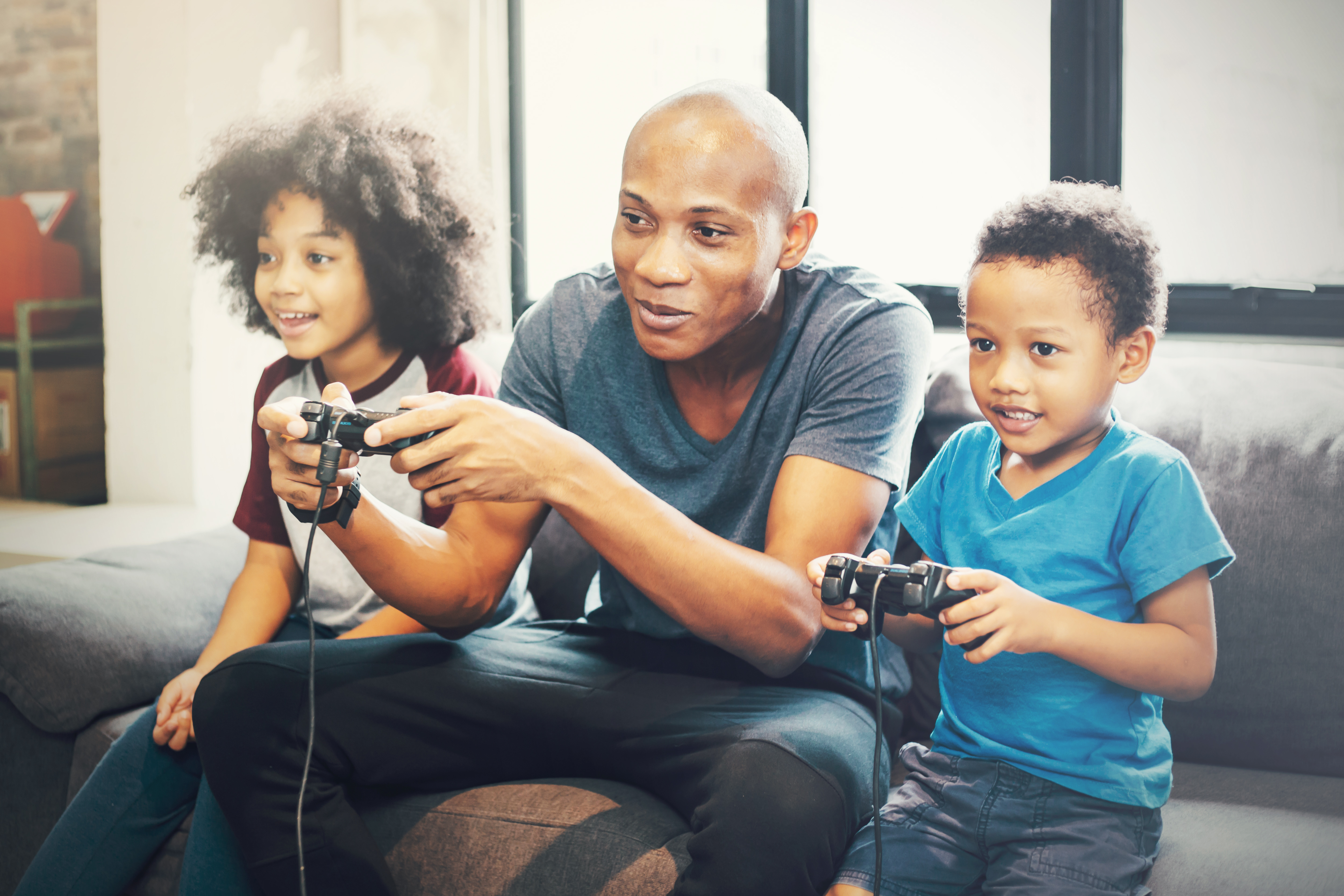
Not all forms of entertainment have seen enough growth in multicultural representation and voices. “With 73% of Black 13 and older gamers, Blacks make up a significant portion of U.S. gamers and are the second-likeliest ethnic group to play, after Asian Americans, compared with 66% of the total population” (Nielsen 2018). However, the game characters and storylines lack the multicultural make-up of the players that play them. Nielsen mentions, “this lack of representation extends to gaming developers as well. But, even with recent projects from games like Culture Shock and Dim Bulb appearing to be early pioneers in showing accurate representation, this industry has a long way to go” (Nielsen 2018).
We see the desire for representation in this space. With Black youth being significantly more interested in watching animated entertainment than Non-Hispanic White youth (YouthBeat® 2018), this is a major opportunity for gaming companies to set themselves apart and create for an audience who is hungry for that representation.
So What?
Who is behind the story matters?
Working on inclusion and representation can be a wise decision for brands, just as it has been for the entertainment industry.
As you think about communicating and connecting with this audience, put them in the driver’s seat. Don’t just hire a figurehead talent to check off the box. Make sure that the firm you seek has deep personal knowledge of the Black consumer.
In addition, the authenticity of the message is even more imperative today. Black consumers can readily access tech to find out the backstories and origins around all communications (even those who created the messaging). Don’t just hire an in-culture actor. Immerse the entire creation process in their cultural group to build authentic connections and speak their language.
In addition, a natural first step is to connect with Black consumers themselves. There are myriad ways to start understanding and connecting with Black and African American consumers, no matter how big or small your budget is. A first step in building cultural empathy with this target consumer group could be through digital channels. Sure, it takes money and discipline; but, the benefits of building deep knowledge of the struggles and realities of Blacks and African Americans—and their journey into fair and accurate representation—are sure to pay off for brands in the future.

explore featured
Case studies