

The Black/African American Healthcare Experience: Mental Wellness, Mistrust, and Market Implications
Filed Under: Black / African American, Multicultural, Shopper, Healthcare

Jorge Martínez-Bonilla
Senior Vice President, CultureBeat

Mens sana in corpore sano…“a healthy mind in a healthy body.” I grew up hearing this phrase in Spanish, first from my mother, then at school, and in everyday conversations. It sounds simple; but in reality, it rarely is.
When Juvenal wrote those words, I imagine he meant them to apply universally, without cultural or social caveats. But achieving mental wellness has never existed in a vacuum. A healthy mind is shaped by context, access, and lived experiences—not just individual effort.
Mental health awareness has increased, yet progress remains uneven. Unlike physical wellness, mental well-being is deeply influenced by external forces: family, work, community, media, and social systems. For the Black community, this reality is longstanding and inescapable.
For generations, Black people have endured trauma, exclusion, and systemic harm that have taken both physical and mental tolls. While physical impacts are often easier to see, mental impacts are cumulative and constantly reinforced. Mental health does not exist separately from society, and for the Black community, it never has.
Mental health in Black communities sits at the intersection of history, identity, culture, and access. For decades, conversations about therapy or emotional struggle were silenced by expectations of strength, privacy, faith, and resilience. That silence is beginning to break. Black Americans are changing how they talk about, understand, and pursue mental health support.
Why This Matters to You and Your Brand
While I am not a mental health professional, it is essential for everyone to prioritize their mental well-being. This is important because people do not engage solely as consumers separate from their personal experiences; they bring with them complex identities, pressures, responsibilities, and emotional states. For brands, understanding mental health in the Black community is not abstract empathy, it is consumer insight. If you want to build meaningful, lasting connections, you must understand what it means to walk in your consumers’ shoes.
Not a New Issue, Just Finally Being Seen
Mental health challenges in the Black community are not new. What is new is the attention they are beginning to receive.
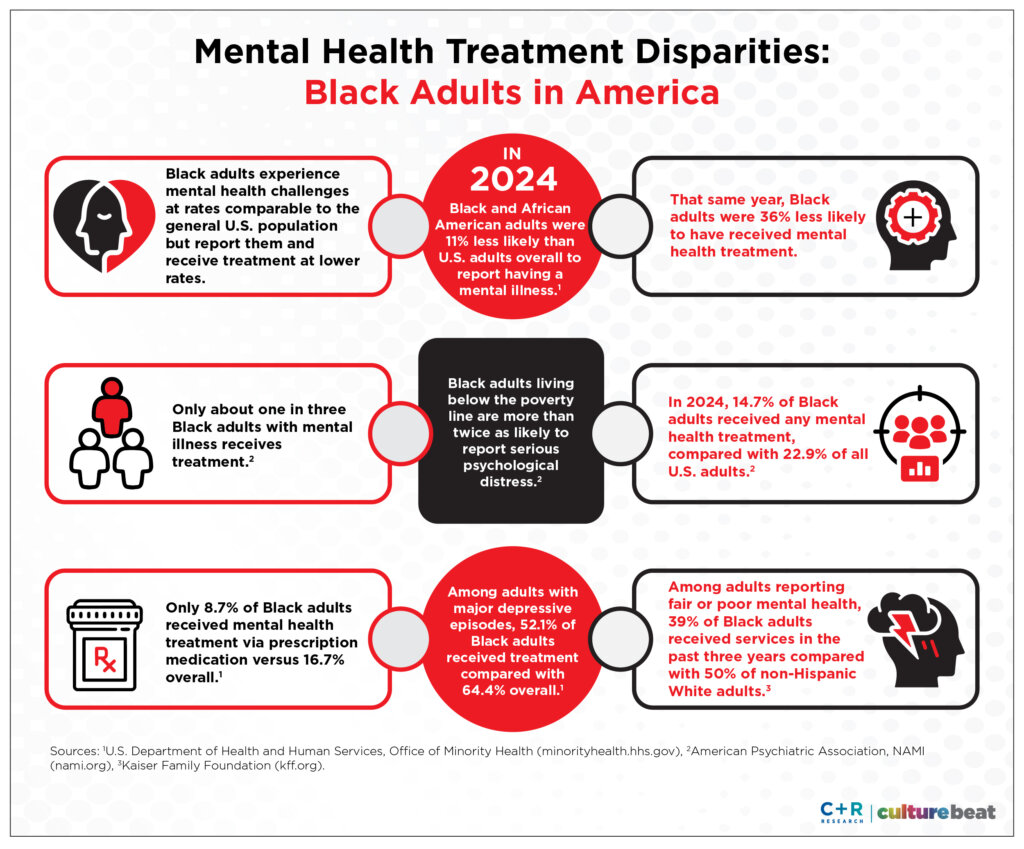
Between racism, economic stress, and the expectation to “push through,” many Black Americans carry far more than they openly share. Data shows that Black adults experience mental health challenges at rates comparable to—and sometimes higher than—the general population, yet they are significantly less likely to receive care.
What the data shows:
Why These Gaps Persist
These disparities are not driven solely by cultural stigma. While expectations of self-reliance play a role, the barriers are systemic.
Medical mistrust is real and intergenerational. From the Tuskegee Syphilis Study to forced institutionalization and repeated dismissal of pain, Black Americans have learned that the system often does not protect them. For many older adults, therapy has long been associated with risk rather than relief.
Socioeconomic barriers compound this reality. About 1 in 10 Black adults reported having no health insurance (NAMI – nami.org). Cost and the inability to take time off work are major reasons Black adults go without needed mental health care (KFF – kff.org).
Access is further limited by a lack of culturally competent providers. Nearly 46% of Black adults who sought care reported difficulty finding providers who understood their cultural experiences (KFF – kff.org). Many also report that professionals dismiss or misunderstand the impact of racism on their mental health (HealthWell Foundation – healthwellfoundation.org).
Stigma remains a powerful deterrent. Fear of judgment or being perceived as “weak” continues to prevent care‑seeking (Journal of Community Mental Health – jcmh.org). These barriers are reinforced by discrimination within healthcare itself—experiences that more than double the likelihood of going without needed care (KFF – kff.org). NAMI recognizes racism itself as a public health threat (nami.org).

Why This Extends Beyond Healthcare
Stories of Black patients being dismissed or dehumanized are real and devastating. Stereotypes distort diagnosis, and systemic inequities limit access. But brands are not outside this system. They are part of the same ecosystem, shaping narratives, trust, and representation.
A cultural shift is underway. Younger Black adults are far less inclined to be silent. Social media has normalized vulnerability, and Black therapists, educators, and creators are reshaping conversations around emotional honesty. While only 4% of U.S. psychologists are Black, new organizations and platforms are actively addressing this gap.
Mental health impacts much more than just the decision to seek care—it also influences everyday behaviors. Emotional strain influences how households plan, shop, set spending priorities, and which brands they trust. Many Black consumers also bear the responsibility of supporting extended family members, which further amplifies both emotional and financial pressure.
A household under strain behaves differently—often prioritizing convenience, affordability, and culturally aligned solutions.
Mental Wellness Is a Market Reality
Emotional wellness is now firmly part of the broader wellness economy. Categories such as sleep aids, supplements, teas, aromatherapy, personal care, stress-relief products, and mood-supportive nutrition intersect with mental health more than many brands perhaps realize.
As stigma decreases, Black consumers are increasingly open to products that support mental and emotional well-being, especially when messaging is authentic, culturally informed, and safe. Trust and representation are powerful market drivers. Brands that demonstrate real understanding and sustained allyship earn long-term loyalty.
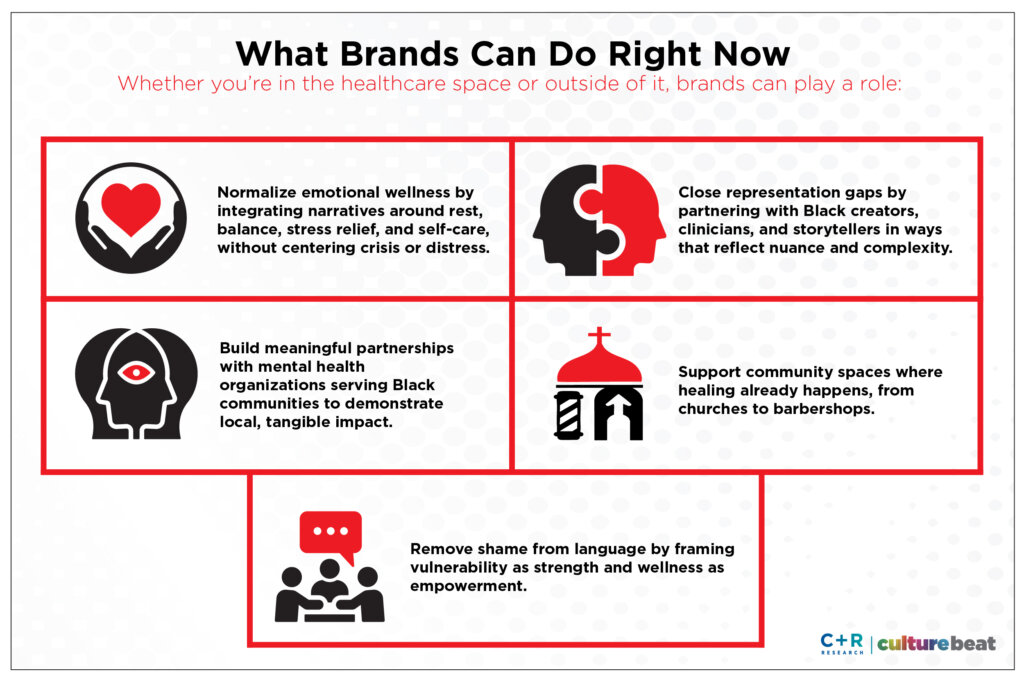
Mental health stigma in the Black community is real, but it is not immovable. The cultural shift underway is generational and long overdue. Black Americans are redefining strength, reclaiming wellness, and reframing vulnerability as courage.
For brands embedded in our everyday lives, recognizing this shift is not optional. It shapes trust, behavior, and expectations. Building empathetic, culturally grounded strategies is not just good business; it is necessary to serve communities authentically. The CultureBeat team at C+R Research is ready to help you do just that.
Mens sana in corpore sano applies to people, and to brands.